



Galvanized Dry Wall Nails - Rust-Resistant, Durable Fixing Solution from China Suppliers & Factory
| Thread specifications d | 3.5 | 4 | 4.3 | |
| d | Max | 3.7 | 4 | 4.3 |
| Min | 3.4 | 3.7 | 4 | |
| dk | Max | 8.5 | 8.5 | 8.5 |
| Min | 8.14 | 8.14 | 8.14 | |
| Thread Length B | Min | - | - | - |
The characteristics of galvanized dry wall nails
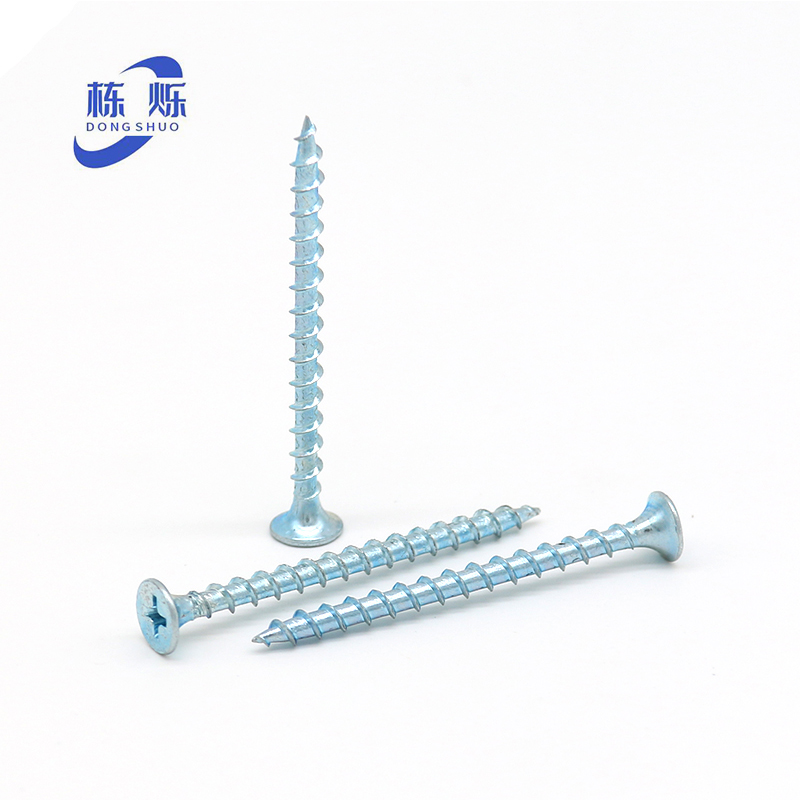
Dry wall nails are a commonly used fixing tool in building decoration, usually made of two materials: iron dry wall nails and galvanized dry wall nails. Galvanized dry wall nail is a type of dry wall nail with a surface that has been galvanized, and its characteristics are as follows:
The surface of galvanized dry wall nails has undergone galvanizing treatment, which can effectively prevent them from rusting.
The galvanized dry wall nail material has moderate hardness and is easy to use. It can be widely used in industries such as dry hanging wall decorations, suspended ceilings, anti-theft doors and windows, and furniture manufacturing.
Galvanized dry wall nails can withstand certain weight and strength, have high fixation performance, and a long service life.
Galvanized drywall nails are coated with a protective zinc layer that delivers superior rust and corrosion resistance, preventing surface staining and structural failure over extended periods.
They are widely applied in dry hanging wall decorations, suspended ceiling systems, burglar-proof doors and windows, and structural assembly in furniture manufacturing.
Based on technical specifications, the head diameter (dk) typically maintains a maximum of 8.5 mm and a minimum tolerance of 8.14 mm across sizes 3.5, 4, and 4.3.
Moderate hardness ensures that the fastener penetrates materials easily without fracturing or excessive deformation, offering balanced drive-in speed and holding strength.
Direct factory sourcing eliminates middleman costs, ensures transparent volume-based price discounts, and guarantees strict quality control standards directly from production lines.
Yes, the anti-rust galvanization treatment provides enhanced protection against oxidation, making them far more durable than untreated fasteners in interior spaces prone to humidity.